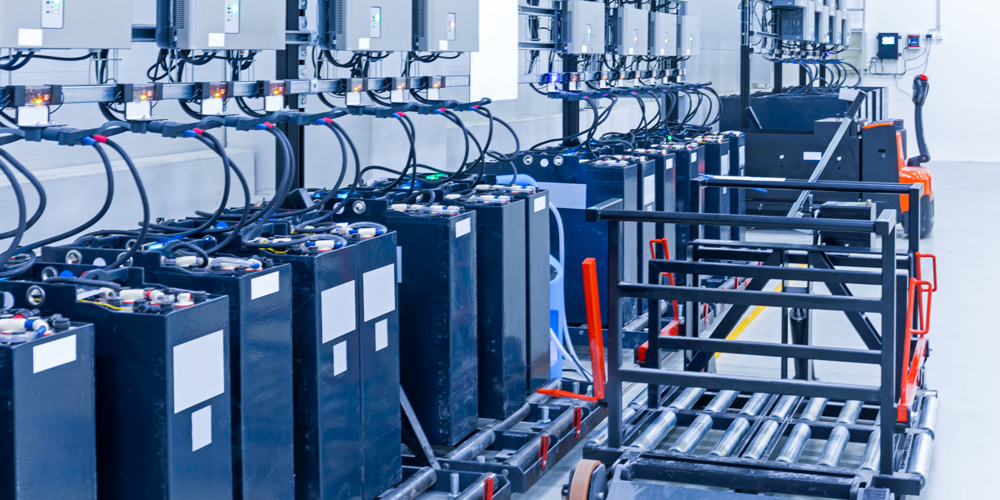
Battery failures carry consequences that extend well beyond the device, such as property destruction, user injury, and product liability exposure. Prevention and resolution demands rigorous technical investigation that must be defensible under scrutiny.
ESi’s battery consulting practice supports clients across a full range of technical questions, including cell supplier evaluation, operating parameter optimization, failure analysis, incident reconstruction, and expert testimony. The team combines electrical engineers, electrochemists, and materials engineers with deep expertise in battery material properties, cell construction, electrochemical behavior, and the failure modes specific to each major chemistry.
Among the earliest adopters of CT scanning for battery investigation, ESi’s expert consultants combine this capability with analytical tools such as SEM/EDS, FTIR, GCMS, and large-scale cycling infrastructure to characterize battery behavior and failure at every level, from the atomic scale to the performance of the full pack under operational conditions.
Need visibility into battery design, performance, and safety? ESi’s battery engineering consulting team is ready to respond.
Battery Testing Applications
Battery and energy storage investigations span multiple disciplines across a range of industries and contexts. The applications below represent the most common engagements for ESi's battery consulting team, each requiring a combination of electrochemical knowledge, laboratory analysis, and engineering judgment.
Battery Failure Analysis
When a battery fails, the investigation must establish whether the failure originated in the cell chemistry, manufacturing process, battery management system, or conditions of use. ESi reconstructs failure sequences using CT imaging, chemical analysis, and electrochemical data to identify the root cause.
Product Liability & Safety Investigations
Battery failure in consumer electronics, power tools, medical devices, and electric vehicles can cause injury or property damage, generating product liability claims. ESi evaluates whether a failure was caused by misuse, design defect, manufacturing deviation, or inadequate safety architecture (such as by the battery management system) and provides findings to support litigation at the expert witness level.
Cell Supplier Qualification
ESi conducts structured cell evaluation programs that include capacity verification, rate capability testing, cycle life assessment, and internal inspection. This provides independent, technically rigorous supplier comparisons that inform procurement and design decisions.
Battery Energy Storage System (BESS) Investigations
Large-scale battery energy storage systems introduce unique failure modes and safety risks. ESi applies its battery consulting expertise to BESS failure investigations, incident reconstruction, and safety system evaluations across grid-scale and commercial installations.
State of Health & Degradation Analysis
Determining a battery's remaining capacity and health requires controlled electrochemical testing and the ability to interpret results in the context of chemistry and usage history. ESi quantifies health and charge, characterizes degradation mechanisms, and provides defensible findings for matters where battery condition is in dispute.
Thermal & Environmental Stress Testing
Batteries deployed in transportation, marine, and industrial environments operate under physical conditions that standard qualification testing may not capture. ESi conducts temperature testing, impedance analysis, and stress testing programs to characterize performance and identify failure risks under deployment conditions.
Intellectual Property Investigation
Commercially valuable battery innovations are often the subject of IP litigation and trade secret disputes. ESi's battery consulting team provides technical analysis, cell deformulation, and expert testimony for matters involving patents, trade secrets, and reverse engineering claims.
Ready to discuss your case? Submit a confidential inquiry and our expert consultants will be in touch.
Advanced Analysis for Reliable Battery Solutions

Contact our Battery Cell Testing Team
Brian M. May, Senior Staff Consultant
ESi Battery Cell Testing Capabilities
- Charge/Discharge Cycling
- Capacity Verification
- Rate Capability
- Cycle Life
- Multi-Cell Analysis
- High/Low Temperature Testing
- State of Health (SOH) and State of Charge (SOC) Estimation
- Impedance
- CT Imaging (analysis of internal features)
- SEM/EDS (analysis of pack and/or cell materials)
- FTIR (analysis of pack and/or cell materials)
- GCMS (analysis of cell gases)
- Climate Controlled Storage for Large Format Batteries
- DDR Battery Handling
- Cell Teardown
- Battery Management System Testing
Why Clients Choose ESi
Battery investigations with legal, regulatory, or commercial consequence require expert battery engineering consultants who can produce findings to the standard those proceedings demand. ESi is chosen for the reasons below.
Early Adoption of Battery CT Imaging
ESi was among the first engineering consulting firms to apply CT scanning to battery cell analysis. That capability is standard in ESi battery investigations and provides a level of analytical depth unmatched by most testing laboratories.
Electrochemical & Materials Expertise
ESi's team combines electrochemists, electrical engineers, and materials engineers who work from the same evidence set and produce a unified analysis rather than separate reports from independent specialists.
Multi-Chemistry Experience
ESi has conducted battery investigations across lithium-ion, lithium polymer, nickel metal hydride, lead acid, and alkaline chemistries in applications such as medical devices, consumer electronics, electric vehicles, marine systems, and grid-scale storage.
Expert Witness Capability
ESi battery consultants serve as expert witnesses in product liability, insurance, and regulatory proceedings. Reports are prepared to evidentiary standards, and consultants are experienced in presenting electrochemical and materials findings under cross-examination.
In-House Analytical Instrumentation
ESi's CT imaging, SEM/EDS, FTIR, GCMS, glovebox, and large-scale cycling equipment is operated in-house by ESi consultants under protocols that maintain chain of custody and produce defensible results.
Developed Infrastructure & Logistics
ESi has built the infrastructure to safely handle and preserve batteries over a large range of sizes. This includes climate controlled storage facilities as well as the ability to transport and handle DDR (damaged, defective, recalled) batteries.
Access to Broader ESi Expertise
Battery incidents often involve questions that extend beyond electrochemistry. ESi's battery consulting team operates within a multi-disciplinary firm that includes fire investigators, electrical engineers, and product liability specialists.